
Our Speakers

Dr. Elizabeth Box
Review of evidence and best practice
Dr Elizabeth Box draws on her extensive experience across multiple roles in transport research, behavioural science and road-user safety. Returning to ICE Live after delivering a highly valued session last year, she will present an updated and expanded look at the latest evidence surrounding the use of virtual reality with different demographics - from school-age learners through to older drivers - and what this means for practitioners designing or delivering VR experiences.
This year’s session goes deeper into the risks and opportunities of immersive VR as a behaviour-change tool. Dr Box will highlight where VR can genuinely support learning and mindset shifts, as well as where its impact can be limited or inconsistent. By reviewing what recent studies show to be most, and least, effective, Dr Box will help practitioners understand how design choices, audience characteristics and delivery context can influence outcomes.
Most importantly, attendees will gain a practical, practitioner-focused guide to navigating and applying research with confidence. Dr Box will show how to locate credible evidence, interpret findings, and translate emerging best practice into real-world programme design. Whether you’re refining an existing VR intervention or commissioning something new, this session is designed to empower you to make informed, evidence-led decisions that maximise the effectiveness of your VR delivery.

Dr Jonathan Rolison
Wrap-around education for VR Interventions
Risk expert Dr Jonathan Rolison joins ICE Live to shed light on a crucial but often overlooked component of VR interventions: the education that wraps around the immersive experience. After countless discussions on hardware and implementation of VR itself, his presentation asks: what happens before and after the headset goes on? By exploring how to properly frame and support VR experiences, Dr Rolison will help practitioners understand how to turn novelty into long-lasting impact.
In this session, Dr Rolison will examine how VR should be integrated into a broader educational ecosystem - not used in isolation. From prep-session briefings and facilitator-led debriefs, to follow-up activities and discussions, he will unpack which techniques enhance memorability, reinforce learning points, and stimulate meaningful behaviour change. Moreover, he will explore how non-immersive formats - such as 360-degree video deployed online - can still benefit from the same wrap-around educational levers and how to apply them effectively.
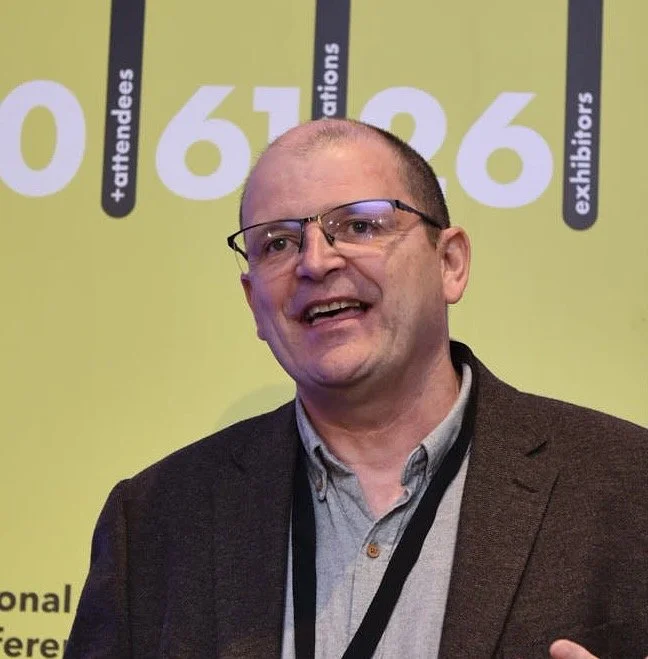
Ian Edwards
Workshop: Practical evaluation for VR-based road safety interventions
Evaluating the impact of VR education is essential - but for many road safety teams, it can feel daunting or simply out of reach. In this practical 45-minute workshop, behavioural scientist Ian Edwards will demystify the process of small-scale evaluation for VR films and interventions.
Designed specifically for practitioners, this session will explore what you can measure yourselves with limited resources, what to consider before commissioning a formal academic evaluation, and how to avoid the common pitfalls that undermine good evidence. Ian will also address one of the sector’s biggest unspoken concerns - what to do when the results aren’t what you hoped for - and how honest evaluation can strengthen, not threaten, your programmes.
Workshop participants will leave with:
A clear understanding of proportionate, achievable evaluation methods suitable for virtual reality interventions
Practical steps for designing simple evaluation plans
Key questions to ask when commissioning researchers or academics
Strategies for interpreting and acting on unexpected or challenging findings
Whether you're already delivering VR education or preparing to adopt it, this workshop will give you the confidence and tools to build a stronger evidence base for your work.
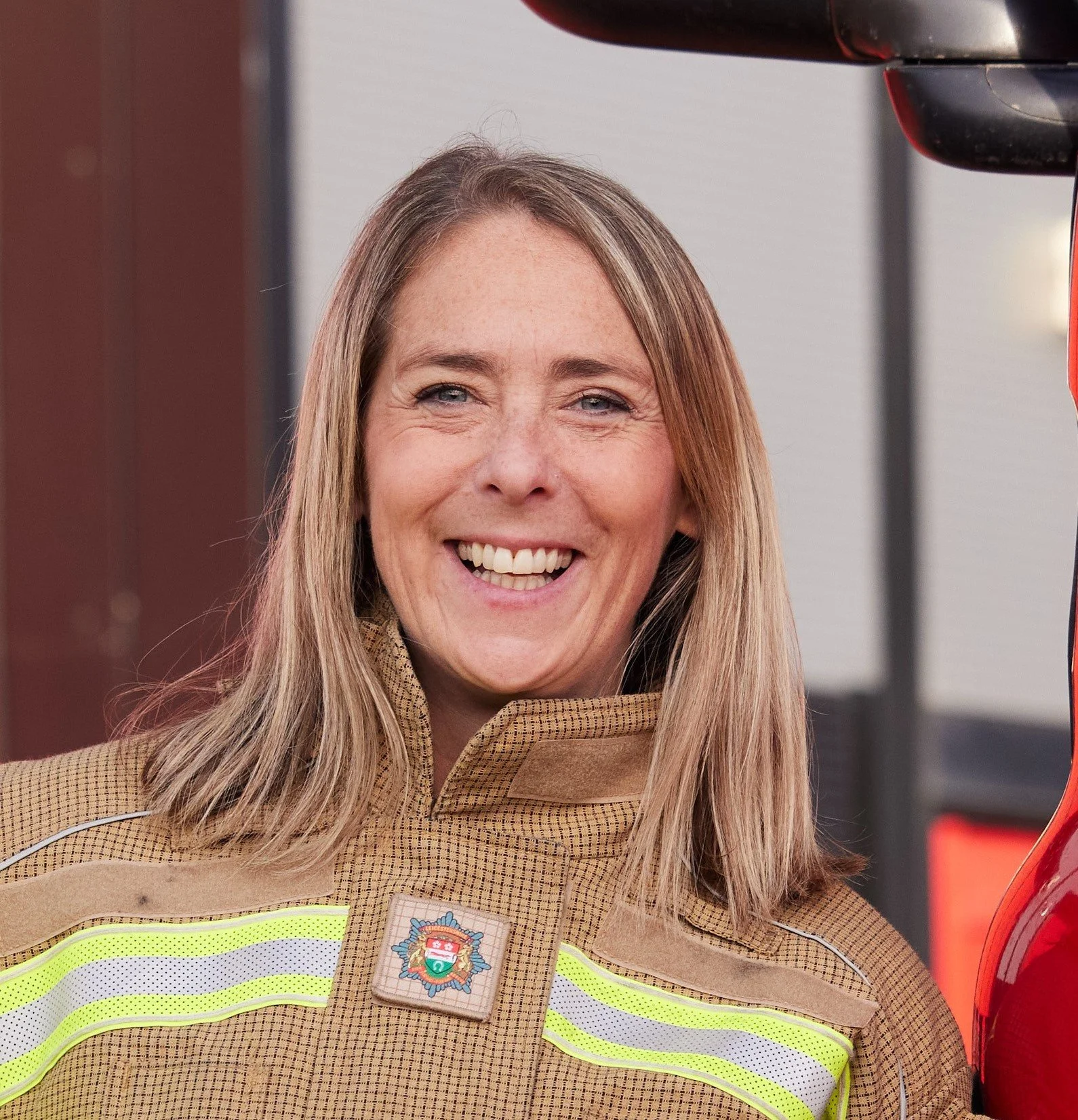
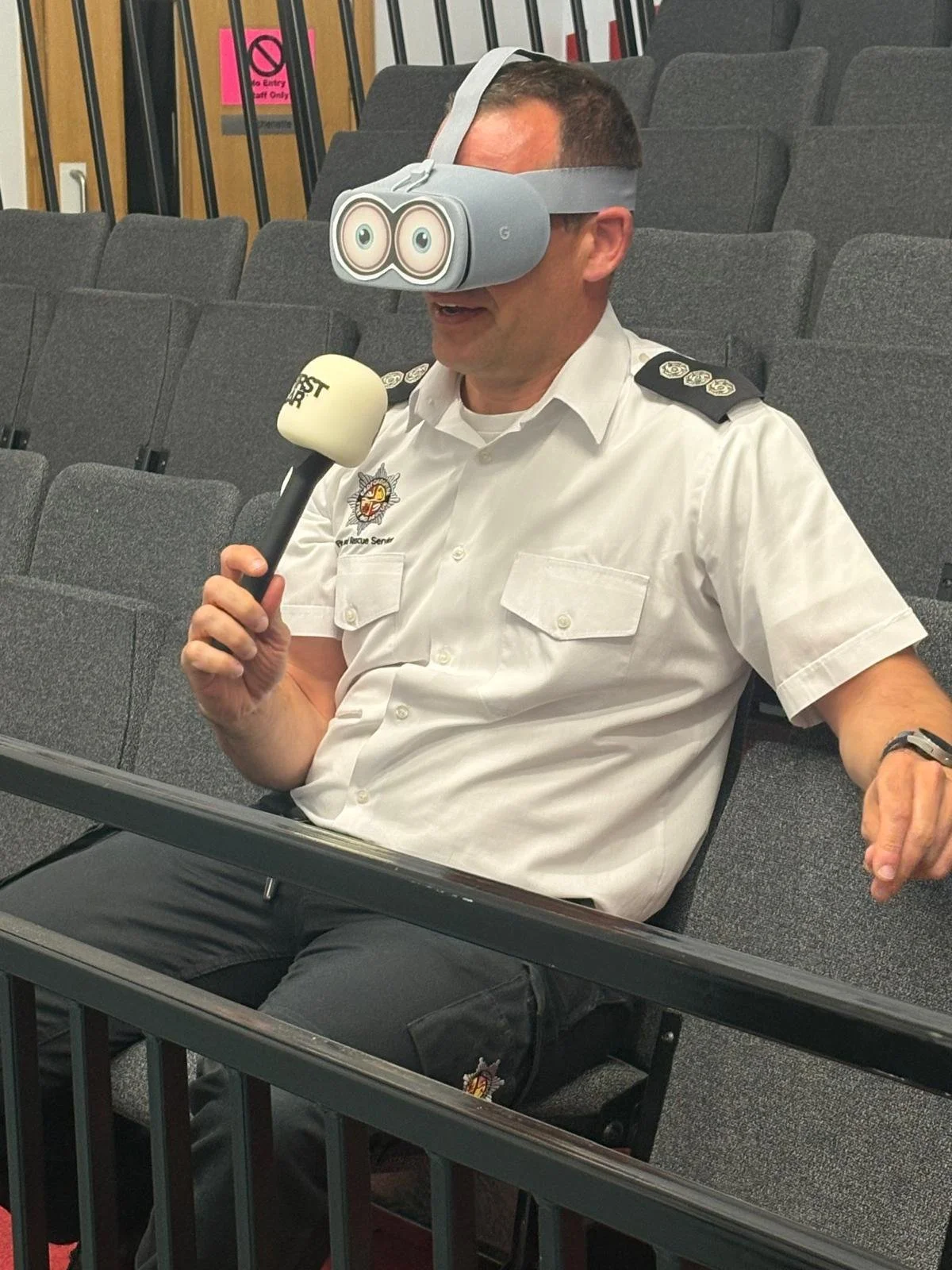
Kate Garrigan and Matthew Hyland (Leicestershire Fire & Rescue and Bedfordshire Fire & Rescue Services)
5 in 5 - new young driver virtual reality intervention
Kate Garrigan (Leicestershire Fire & Rescue Service) and Matt Hyland (Bedfordshire Fire & Rescue Service) will present 5 in 5, a new scenario-based virtual reality film designed for newly qualified drivers. Developed as an evidence-led update to Leicestershire Fire & Rescue Service’s original crash car intervention, the film focuses on five key risk factors that disproportionately affect new drivers: fatigue, speed, passenger distraction, seatbelts, and mobile phone use. The intervention is designed to reflect the realities of early solo driving, using relatable scenarios rather than shock tactics.
In their session, Kate and Matt will talk through the planning and production process behind 5 in 5, exploring the challenges and opportunities of creating a modern VR intervention within a fire and rescue service context. The film incorporates real-world VR footage from a Euro NCAP crash test to demonstrate the importance of seatbelt use in a powerful, evidence-based way. 5 in 5 will be released to ICE Hub members on the day of ICE Live, with attendees gaining insight into both the finished film and the thinking that shaped it.
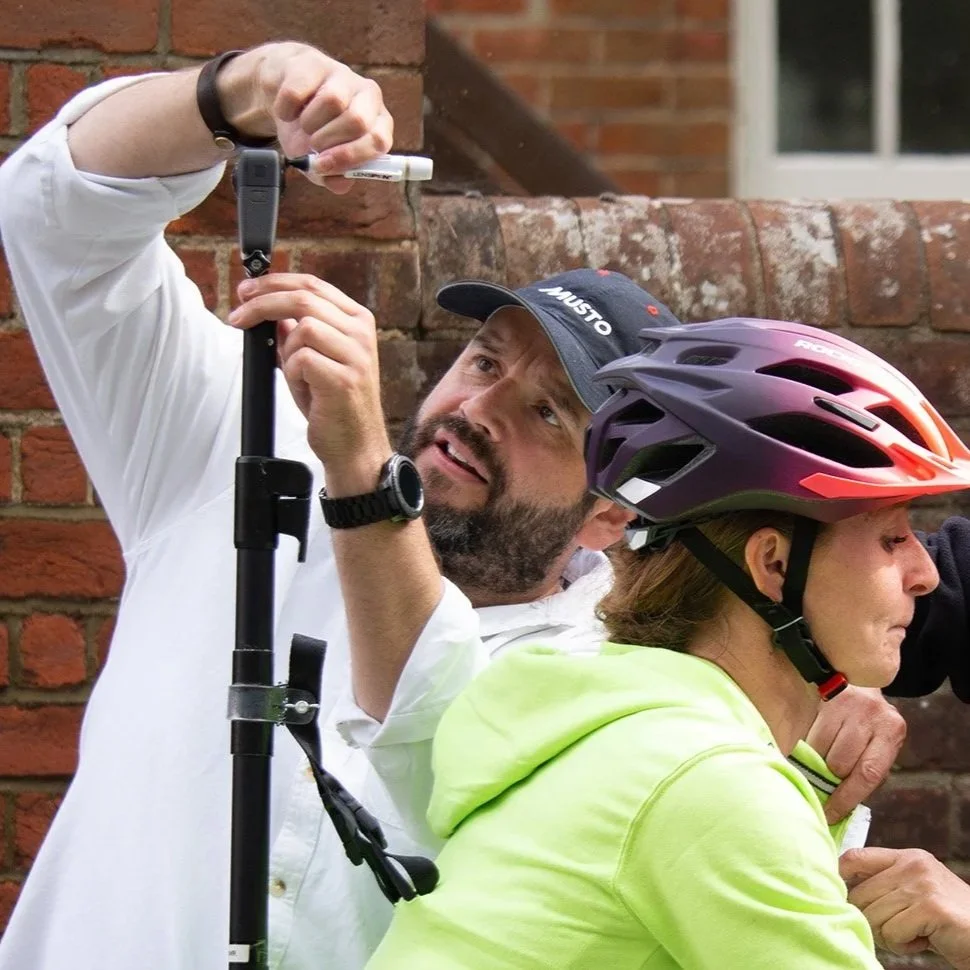
Jonny Simpson-Lee
Antigravity A1 - the 360 drone that will revolutionise VR film making
Jonny Simpson-Lee is an award-winning virtual reality cameraman and 360° specialist whose work spans immersive storytelling and innovative capture techniques. At ICE Live, Jonny will introduce the Antigravity A1 - widely recognised as the first purpose-built 360° drone with integrated high-resolution capture capabilities. This all-in-one 360 drone represents a significant evolution in aerial immersive filming, with embedded sensors and camera systems designed to streamline production, enhance safety, and expand creative possibilities in ways that conventional drones and external payload rigs cannot
Drawing from being one of the earliest professionals to take delivery of the Antigravity A1, Jonny will showcase how this drone can revolutionise how road safety projects capture immersive footage. His session will explore the practical advantages of the new technology, from versatile “reframe in post” workflows to safer, more dynamic aerial perspectives that extend both production value and educational impact.

Rebecca Gill, Founder - VR Therapies
Creating accessible VR interventions
Rebecca Gill is the founder of Virtual Reality Therapies, a social enterprise using virtual reality to support people with autism, neurodivergence, learning disabilities, brain injury and mental health challenges. Drawing on more than 12 years as a registered nurse in learning disability and neurological settings, she has worked with healthcare professionals, the NHS and researchers to develop VR interventions grounded in real-world clinical practice.
Rebecca will examine the risks and rewards of using virtual reality with autistic and neurodivergent individuals. Because neurodivergence is prevalent across the general population, VR interventions are often delivered without explicit adaptation, raising critical questions around safety, accessibility and effectiveness - particularly for those with higher support needs or sensory sensitivities.
The session will introduce the SPARK framework, a person-centred approach to therapeutic VR implementation. SPARK guides practitioners to start with sensory needs, personalise the experience, adapt in the moment, and focus on building confidence and resilience rather than task completion. It also encourages capturing key moments that link VR experiences to real-world understanding.
Using SPARK as a structure and drawing on clinical experience and case examples from her sessions, Rebecca will discuss how VR can be highly effective when used thoughtfully, and where additional care and flexibility are essential to prevent distress or unintended harm. This session offers valuable insight for anyone using, or considering using, VR with people who have additional or complex needs.

James Evans, Founder - FirstCar
GigRideSmarter – VR rider engagement
Riders working in the gig economy face intense time pressure, app-driven distraction and long hours on the road - a combination that can normalise illegal and high-risk choices such as speeding, phone interaction on the move, fatigue riding and non-compliance with road rules.
Compounding these risks is the fact that gig riders are often a hard-to-reach audience: many are transient, work across multiple platforms, operate outside traditional employer structures, and are less likely to engage with conventional training routes. In this session, James Evans shares how GigRideSmarter was designed and filmed as a practical VR engagement resource.
James will outline the GigRideSmarter resource, which includes a short diversionary VR film intended for police deployment as an alternative to prosecution, plus a proactive series of bite-sized VR films (designed for mobile access) focused on key rider risks including speeding, distraction, fatigue, PPE, maintenance, road rules and hazard perception. The session will also explore the opportunity for joint enforcement and education approaches - using consistent messaging, shared assets and proportionate interventions to reduce harm while supporting riders to keep earning safely. All films are freely available for road safety teams to deploy and adapt within local engagement activity.
Callum Steel, Business Development Manager, Avantis Education
Impactful Road Safety with safe delivery
During the session we will explore the ClassVR headsets and the delivery platform. Using ClassVR to explore the ICE hub videos, we will demonstrate how virtual reality can safely deliver real, impactful and memorable sessions that enable users to put themselves into a range of real-life simulations on the road.
Five take outs form this session:
How to use VR safely
Impact of VR
Learning outcomes
Shared Community
Creating, uploading and managing your own media